
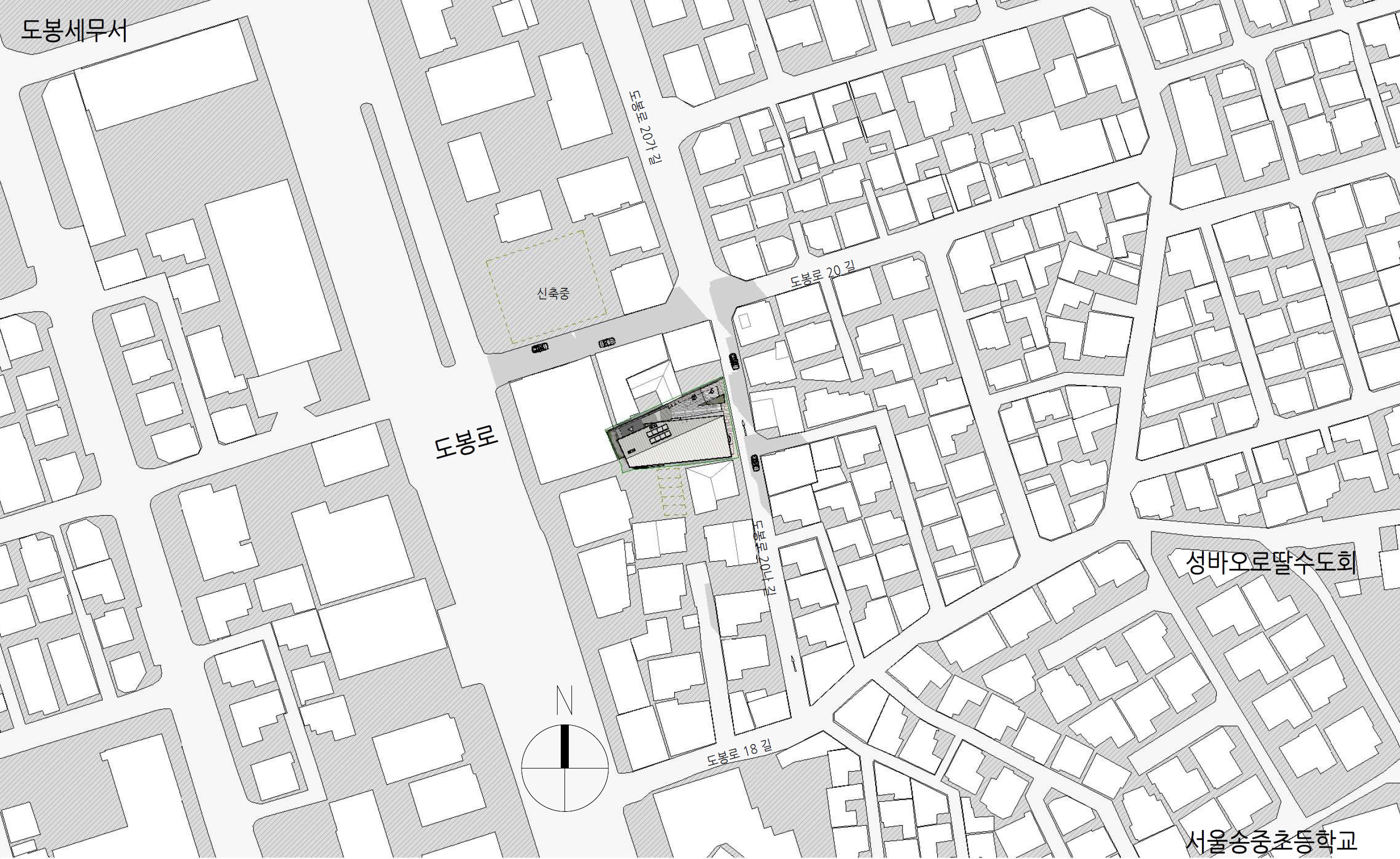
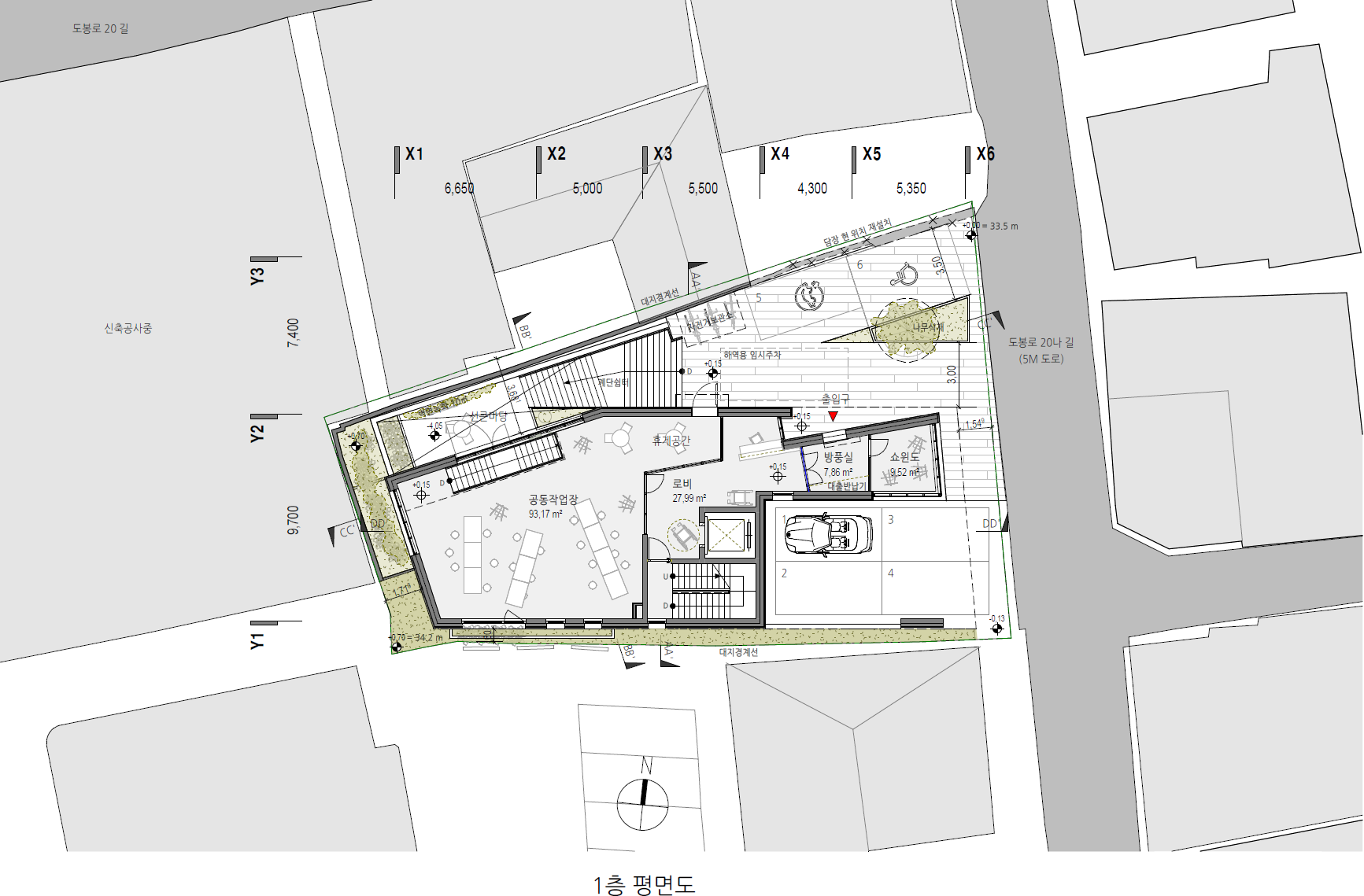
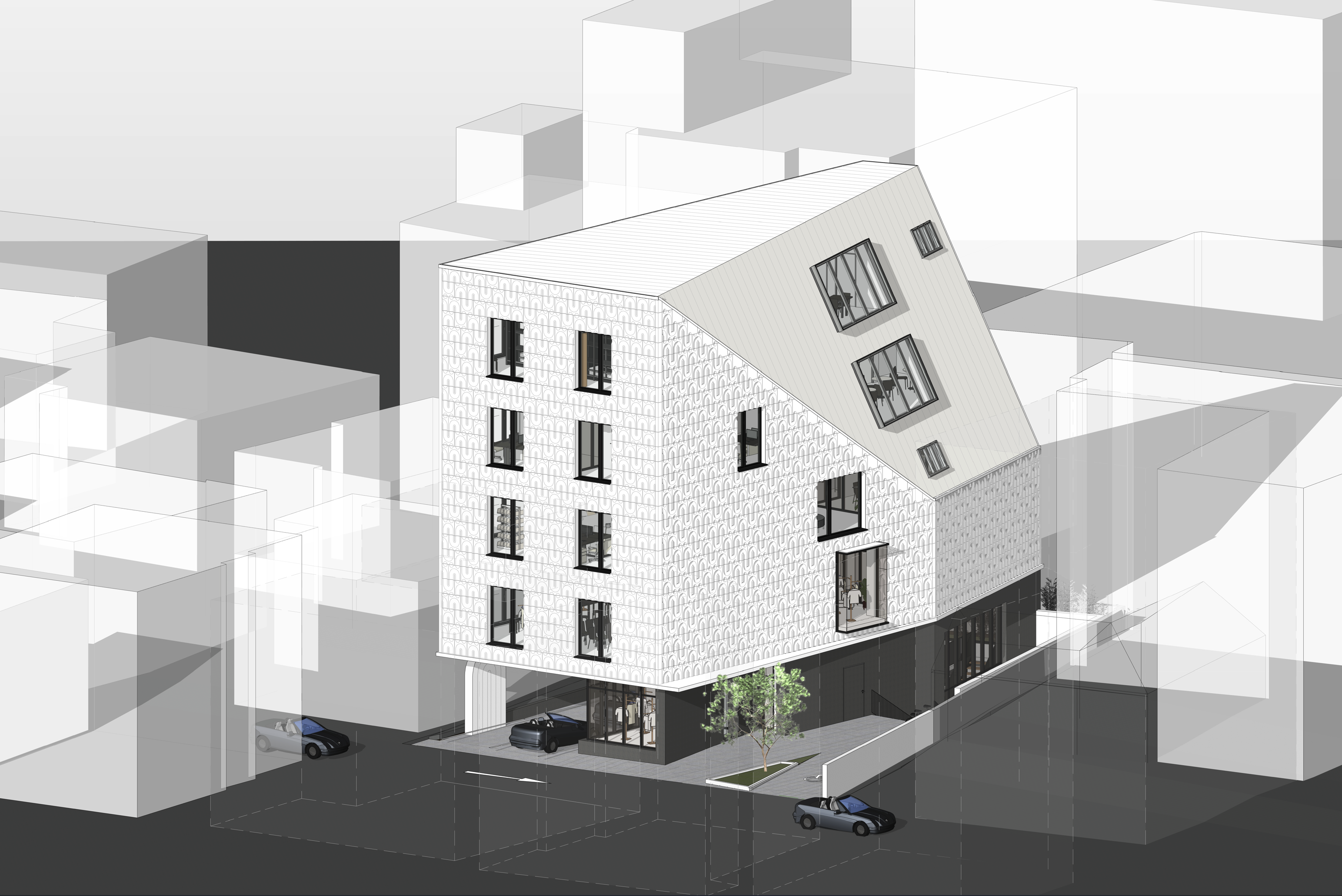
1. Ensuring Public Accessibility The building is designed to naturally connect the interior and exterior through a narrow alleyway. A courtyard that expands from the alleyway leads seamlessly into a sunken garden. The open space at the front of the building allows for various events to take place.
2. Improving Visibility The surrounding buildings vary in height and feature complex forms with irregular masses. Buildings along the main road, Dobong-ro, are over six stories tall, making it difficult to recognize the site located in the alleyway. This project simplifies the building’s mass and increases its height to enhance visibility. A unique façade design will further establish the building’s identity.
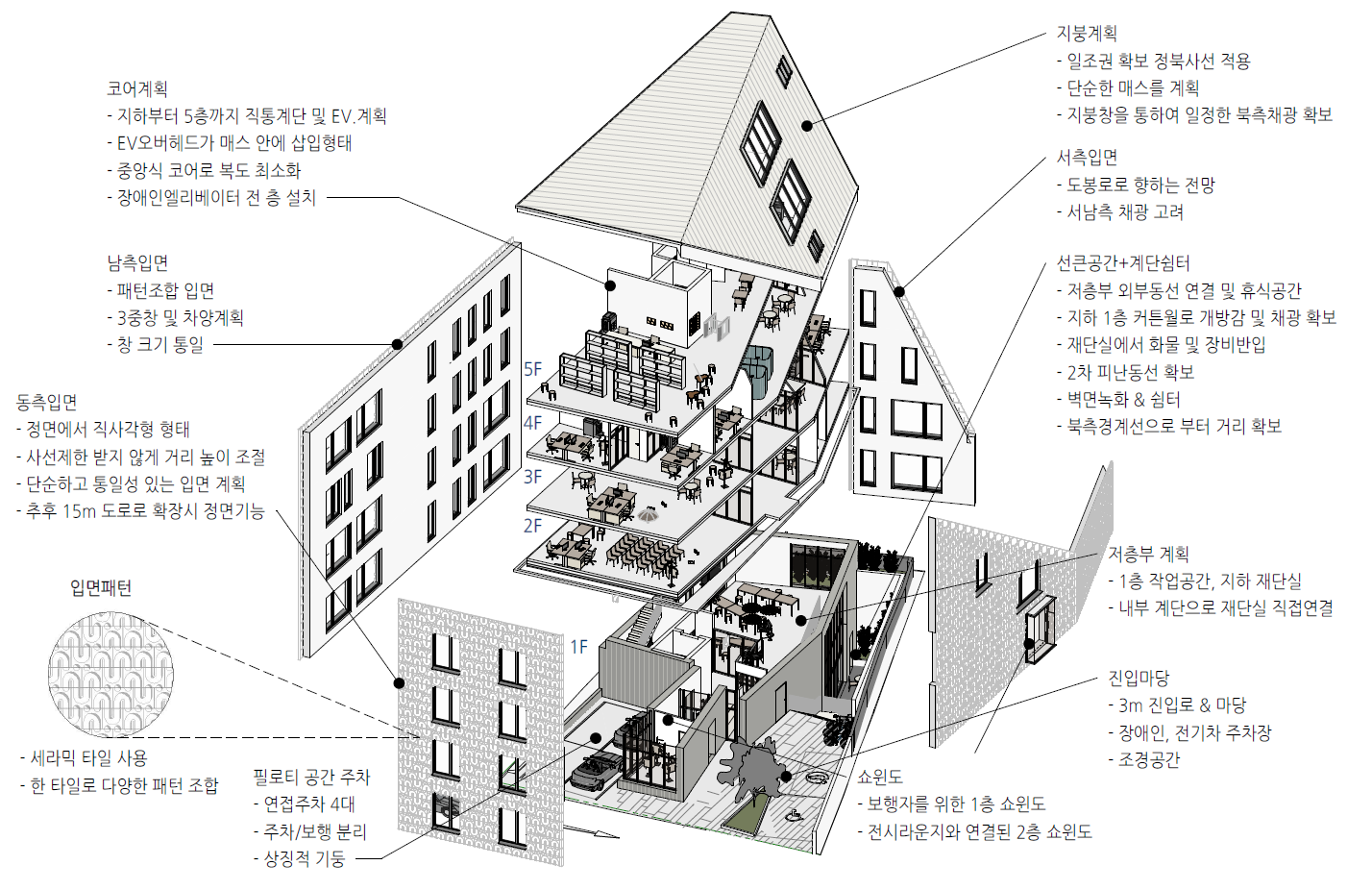
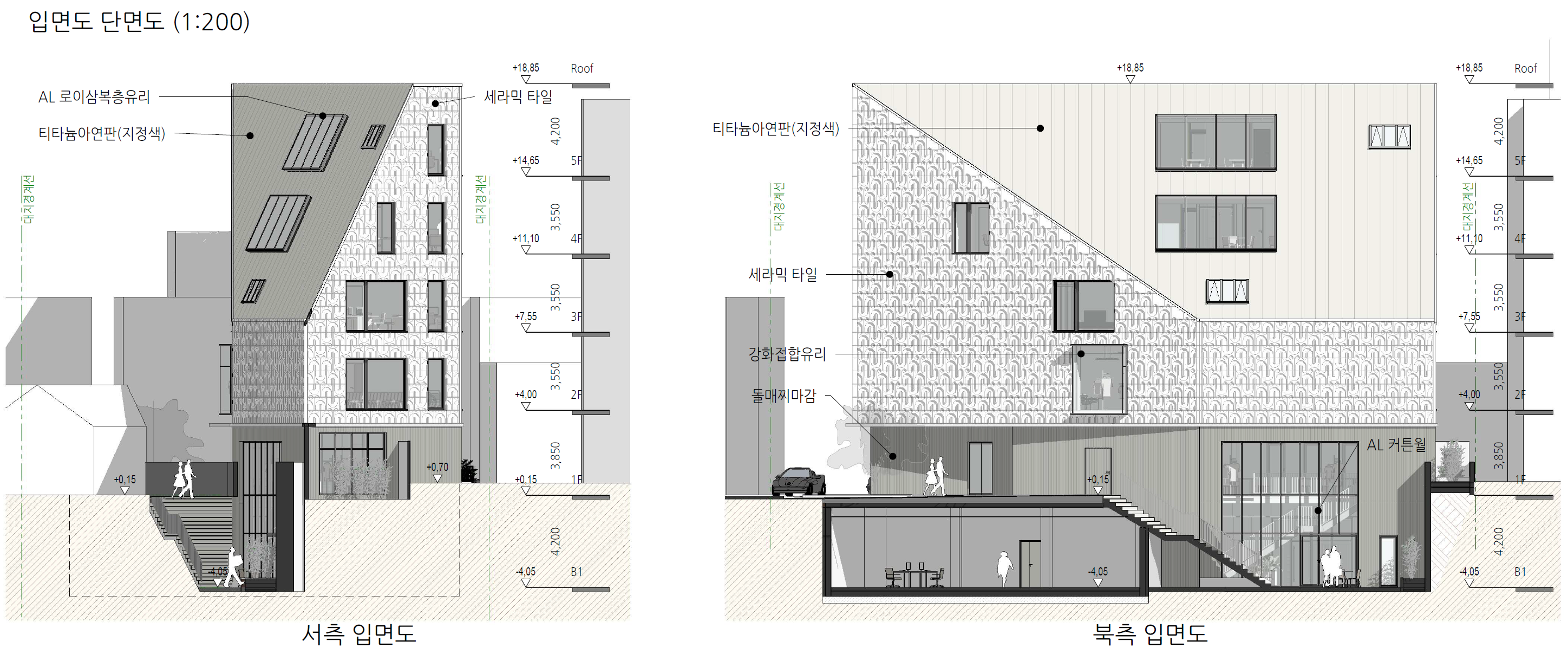
3. Expressing the Functional Space Program The façade is designed to intuitively showcase the fashion-related programs to the exterior. The ground floor features a display window for pedestrians, while the second floor includes exhibition spaces that function as large display windows visible from a distance. The distinctive pattern and refined surface of the exterior wall symbolize the method of weaving textiles, aligning with the building's theme.
Public Office Facility, Site Area: 485.3 ㎡, GFA: 1,298 ㎡, BCR: 48.56%, FAR: 205.24%
ASK + UBAC, Submission




White Ceramic Surface Relief Panels
Inspired by the principles of pattern design, a single panel was created to form various combinations. By simply rotating the panel 180 degrees, it can interact with adjacent panels in diverse ways, enhancing the complexity of the overall pattern. While the smaller patterns may appear intricate, the consistent size and material of the panels create a façade that feels cohesive and unified.
The semi-circular motifs resemble knitting yarn but also symbolize fingernails. In the fashion industry, there is a saying that a craftsman becomes skilled only after losing their fingernails to a sewing machine three times. This design element reflects the collective efforts and dedication of countless individuals who have contributed to the growth of the fashion industry. It serves as a reminder of the labor of those who worked in the textile industry before the fashion industry took shape.
The same construction principle was applied to design the pilotis columns on the ground floor.